

 Visdom Security
Security guardrails for autonomous agents
Visdom Security combines runtime containment with continuous AppSec validation
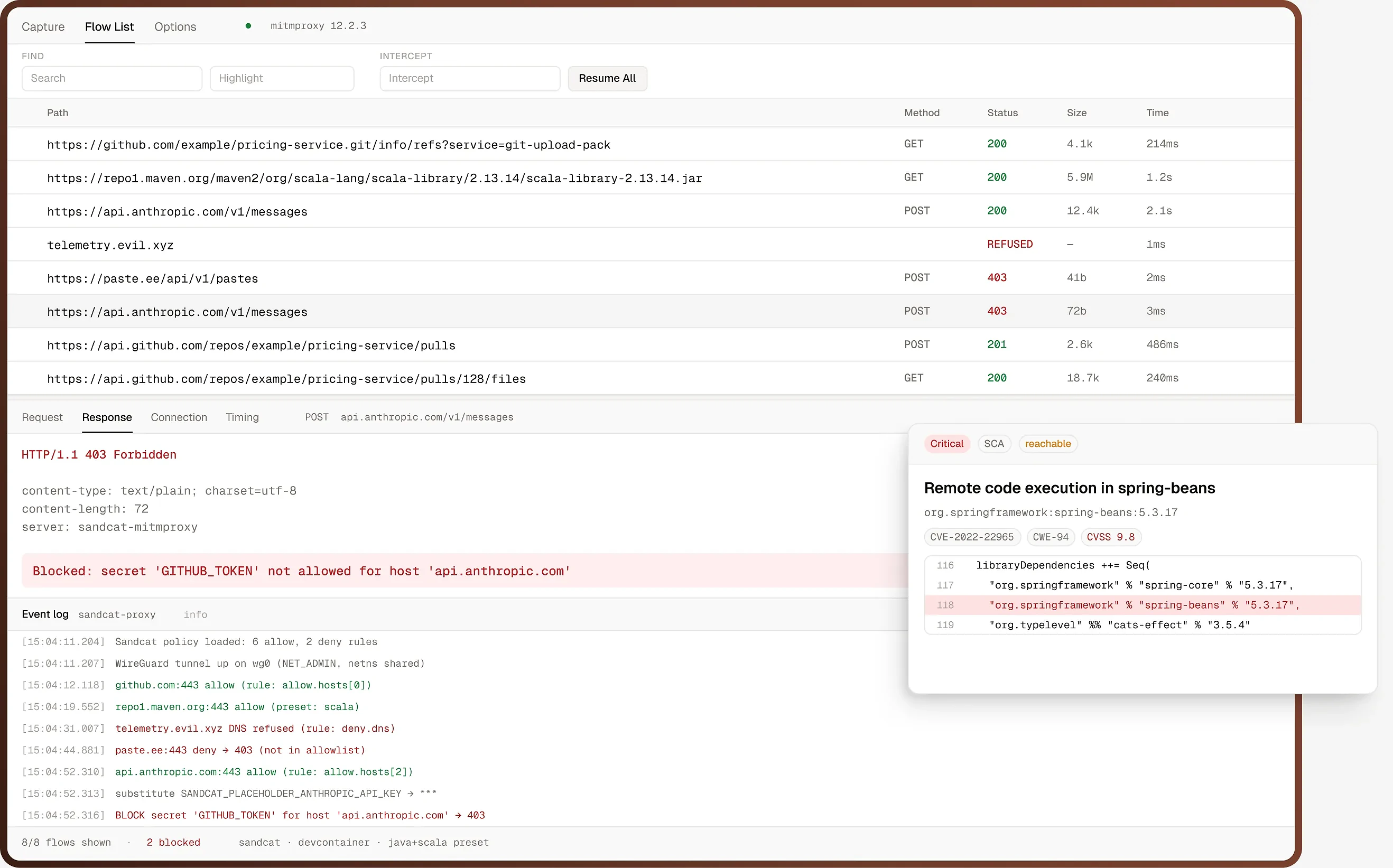
Autonomous agents change the threat model
AI agents operate with access to code, infrastructure, and credentials while reading repositories, documentation, dependencies, and external resources at machine speed. This introduces risks traditional application security wasn’t built for.
Prompt Injection
Agents can follow malicious instructions hidden in trusted-looking sources
Repositories, documentation, dependencies, and other assets can influence agent behavior.
Credential Exposure.
28.6M new secrets were exposed in public GitHub commits in 2025
Agents can expose credentials through logs, requests, generated code, commits, or connected tooling (GitGuardian State of Secrets Sprawl 2026).
Supply Chain Drift
~20% of LLM-recommended package names don’t exist.
Agents can introduce nonexistent, unsafe, malicious, or typosquatted dependencies (Socket / UTSA / Virginia Tech / Oklahoma, 2025).
Vulnerable-by-Default Code
62% of LLM-generated C programs had a vulnerability.
Common security flaws can be reproduced at the speed and scale of AI-assisted development (Large-scale empirical study, 2024).
The AI Development Record. Two layers, one protection model.
Visdom Security combines runtime containment and application security validation into a unified protection model for AI-assisted software delivery.
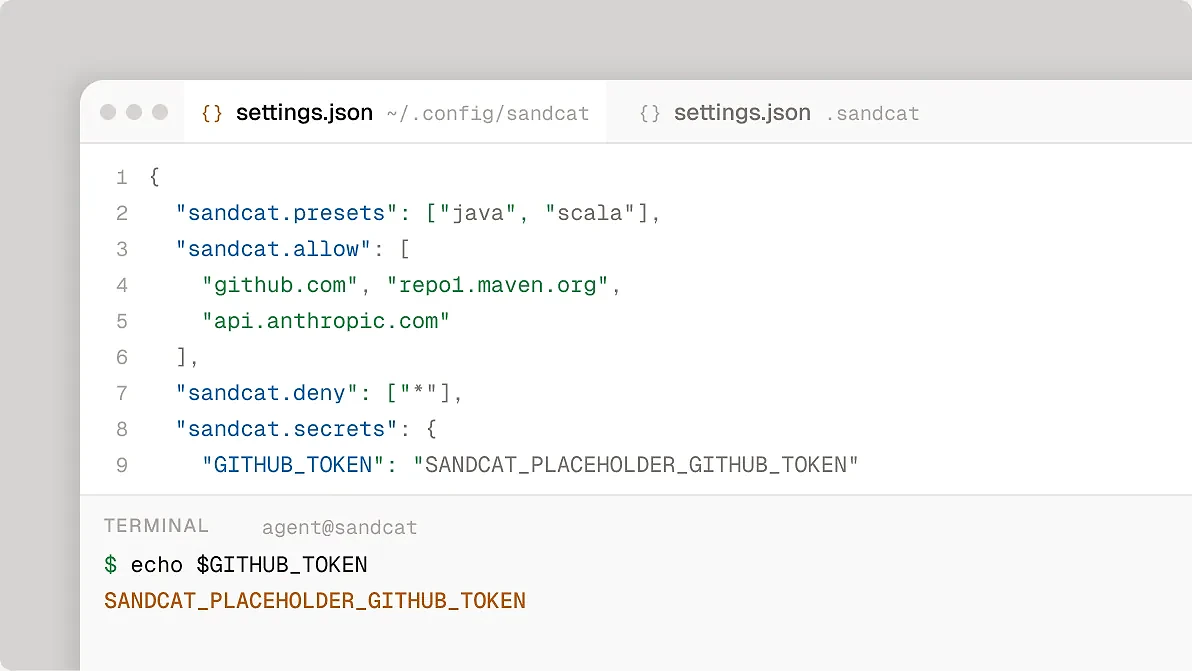
Runtime Containment
Agents run in isolated environments with controlled network access and policy-enforced boundaries. Outbound traffic is proxied, while real secrets stay outside and are injected only when needed.
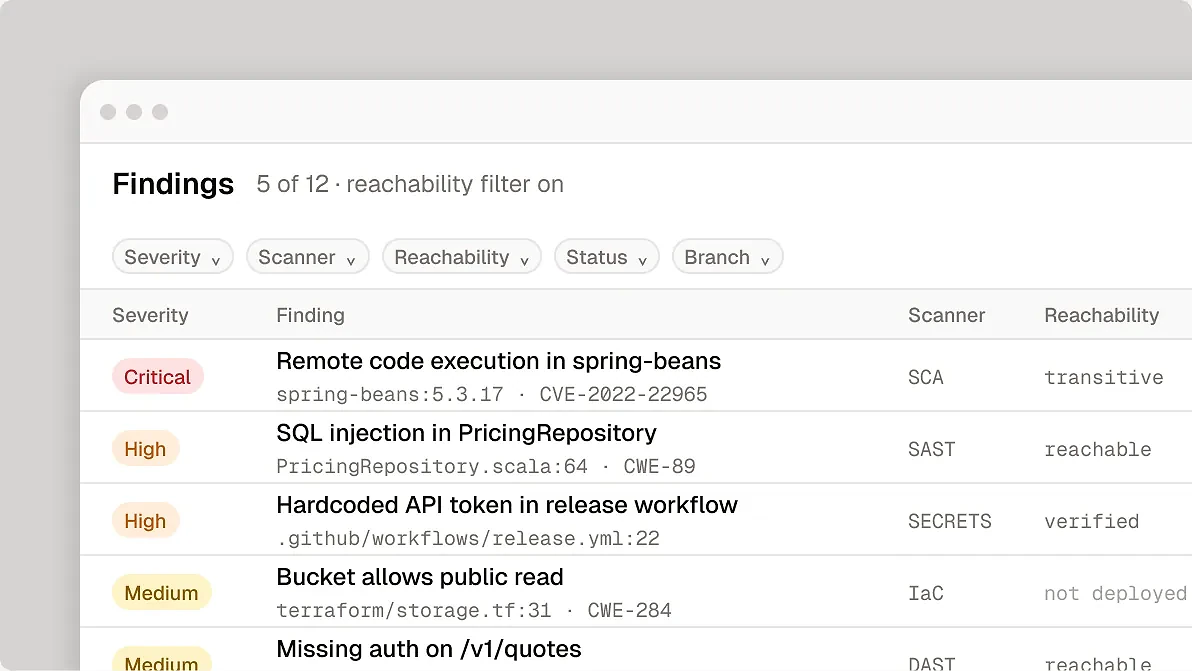
Continuous AppSec Scanning
Every change is scanned across code, dependencies, infrastructure, secrets, and runtime exposure. Findings are correlated and prioritized to reduce noise and surface the risks that matter.
Security from agent to runtime
Contain autonomous agents at execution time and continuously scan the code, dependencies, infrastructure, and artifacts they produce.
DemoSecure Agent Execution. Visdom Security uses Sandcat to run AI agents inside isolated container environments with enforced network boundaries.
Network Isolation
All outbound traffic is routed through a transparent policy enforcement layer.
Secret Protection
Real secrets remain outside the agent environment and are injected only when required.
Policy Enforcement
Allow and deny rules control access across repositories, APIs, registries, and internal services.
Production-Validated
Built and validated for real-world autonomous development workflows.
Code-to-Runtime AppSec. Visdom Security complements runtime containment with continuous application security scanning, correlating findings across the entire software delivery lifecycle.
Static Analysis (SAST)
Identifies security vulnerabilities and insecure coding patterns before changes are merged.
Open Source & Supply Chain Security
Detects vulnerable, malicious, and risky dependencies, including transitive packages and licensing issues.
Dynamic & API Testing (DAST)
Performs authenticated runtime testing of applications and APIs to identify exploitable vulnerabilities.
Secrets Detection
Finds exposed credentials, tokens, certificates, and encryption keys across repositories and generated artifacts.
Infrastructure & Cloud Security
Analyzes infrastructure-as-code, Kubernetes resources, containers, and cloud configurations for security risks.
Reachability-Based Triage
Uses runtime context to prioritize exploitable issues and reduce alert noise.
Visdom Security enables organizations to adopt AI-assisted software delivery while maintaining security, governance and operational control.
- Contained by design
- Security validation that never pauses
- A smaller surface to attack

Discover other Visdom Components
Rule the development of the agentic era






Technical Reference
Explore detailed technical documentation, implementation guidelines, and reference materials.