Visdom AI Tour 🇨🇭Zurich May 🇺🇸New York June 🇺🇸New York Next stop: September 🇺🇸San Francisco October
Visdom 2.0
AI-Native SDLC Platform

The Missing Layer Between AI Coding and Production

Production-ready AI-Native SDLC workflows implemented with your engineering team.

Fully Customizable Start Small, Scale Fast

Forward-Deployed Build Pattern

We embed, deploy, and partner.

Phase 1
Assessment

We assess your current stack, map the gaps, and name the first pilot team.

Phase 2
Pilot implementation

We deploy the kit into your repos, CI, and controls with your platform engineers in the loop.

Phase 3
Scale and improve

We scale the rollout across teams, review architecture, and unblock the edge cases as adoption grows.

Phase 4
Support

An ongoing partnership for architecture reviews and the next maturity step, on predictable terms.

AI got fast. The pipes it runs through did not.

You rolled out the assistant. Engineers were excited. Then throughput stalled and the ROI faded. The assistant was never the bottleneck. The delivery infrastructure around it was: pipelines, CI, and review built for humans typing at human speed. Plug an AI into that and it does not get fixed, it exposes every crack.

What changed

AI agents now generate code faster than any human.

The constraint moved from writing the code to understanding, validating, and safely shipping it.

What did not change

  • Context Still lives in someone's head, not in the system. Agents see open files, not the dependency and intent graph.
  • Execution 45-minute CI built for humans. For an agent iterating fast, more time goes to waiting on the build than writing the code.
  • Verification Tests written by the same agent that wrote the code. Coverage looks great, bugs still ship.
  • Validation PR review that still waits on the same seniors. Spec and merge review turn into hollow rituals.

So we built the infrastructure layer AI actually needs.

The platform for operating AI-Native software delivery.

Visdom is VirtusLab's AI-Native SDLC platform. AI can already write the code; the hard part is shipping it at enterprise scale. Visdom composes the delivery system around the agent (context, review, testing, governance, security, and CI) into one governed pipeline, so your organization can stop demoing agents and start operating them in production.

What defines it:

  • 01 Composable

    One platform, composable components. Start with any one, expand at your own pace. Context, review, testing, governance, security, and CI, used together or on their own.

  • 02 Governed

    Changes flow through one system, with policy enforcement and a tamper-evident audit trail end to end. The complete loop, not a drawer of disconnected point tools.

  • 03 Owned

    Our engineers deploy it inside your repos, CI, and infrastructure, then hand it over. You run the operating capability. Nothing leaves your environment.

Here is how a change flows through it.

One architecture, end to end

Context Fabric feeds the agent system, code, organizational and historical context over MCP, both ways, continuously. The change then clears testing, multi-level review and risk triage; Visdom AI Tracing signs every step.

Visdom architecture: Context Fabric, Coding Agent (Cursor, Claude, Codex), Testing, Code Review, PR triage and Visdom AI Tracing. Visdom AI Tracing Ed25519 Jira Git history Review comments Repositories Docs & ADRs Owners & on-call Visdom Context Fabric queried by every stage Preflight context Active context Coding Agent Sandcat sandbox Runs your agent Cursor Claude Codex Visdom Testing Classic tests Architecture testing Property-based Mutation testing Pull Request Visdom Code Review L1 Linting review L2 Deterministic review L3 Single-pass LLM L4 Deep LLM review Triage Risk gate green · trivial: auto-fix → back to agent High-risk human approval approved Production
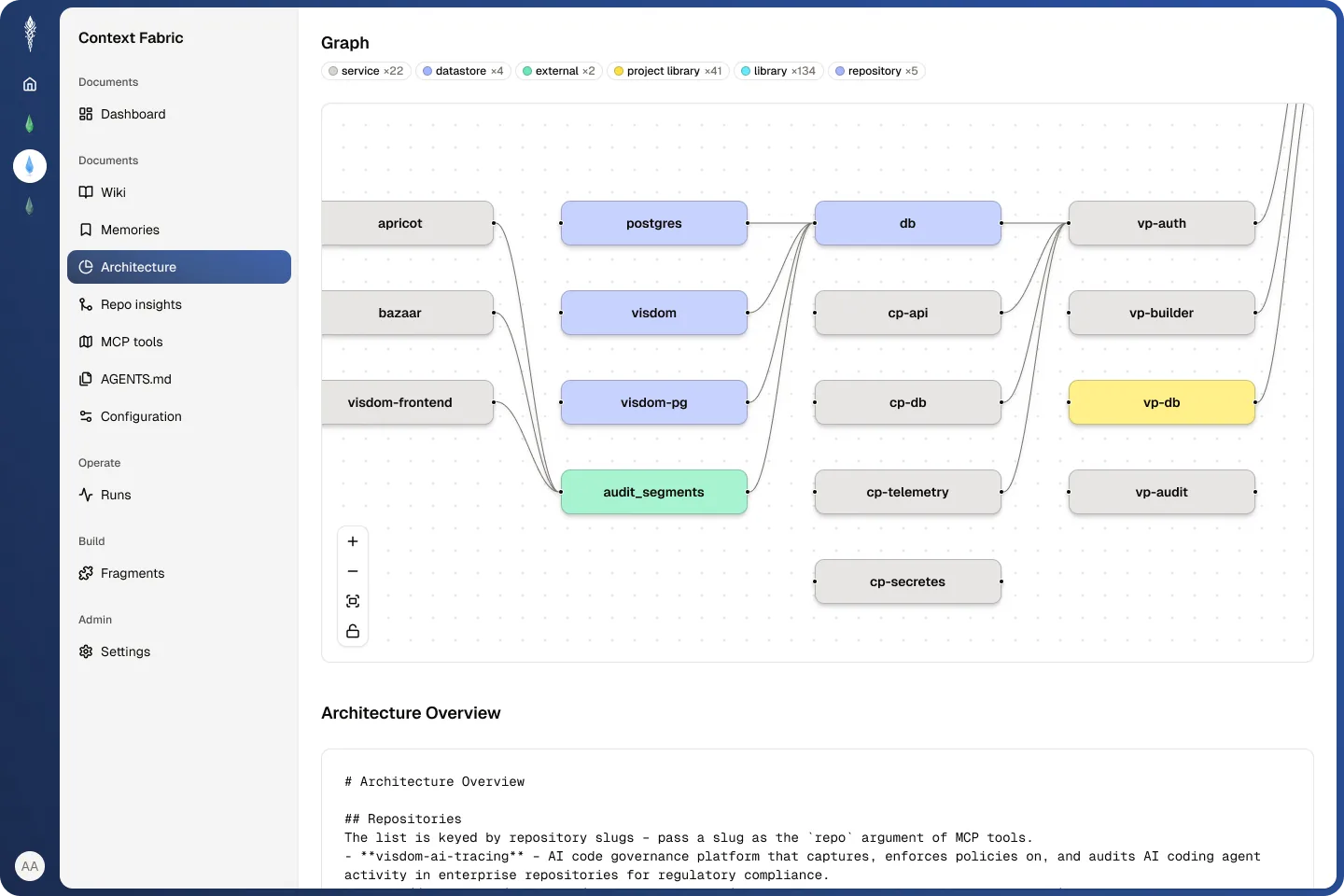
  1. Jira tickets, git history, old debates, buried docs: everything your team knows, woven into one fabric the agent can actually ask.
  2. No cold starts. Before the first line of code, the agent already knows the task, the owners, and the landmines.
  3. Who owns this? What breaks if it changes? The agent keeps asking, the Fabric keeps answering. Context never stops flowing.
  4. Agents love tests that pass. These gates do not care: architecture rules, property-based inputs and mutation testing expose what green CI hides.
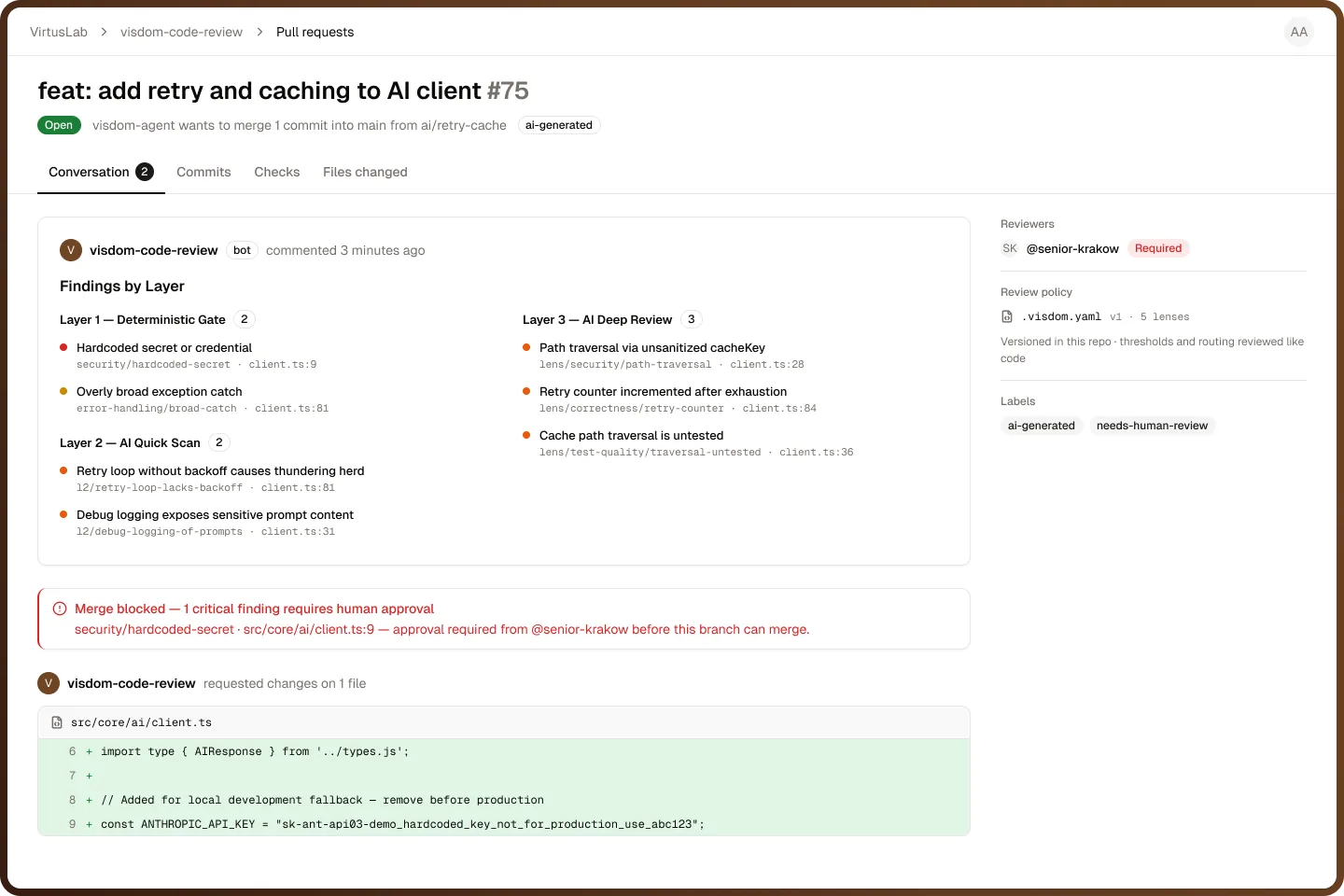
  5. VCR reads every PR in CI before any human does: lint, deterministic checks, then LLM passes that know how your repo is actually written.
  6. Not every bug deserves a meeting. The gate scores path, diff and coverage: trivial ones the agent fixes on the spot, the risky ones stop and wait for a human.
  7. Every prompt, decision and test lands in a signed, hash-chained ledger. When the auditor asks, the answer already exists.
  8. All gates green. The change rolls out with receipts: tested, reviewed, traced. Ship it and enjoy the moment.

One ticket in.
One pull request out.

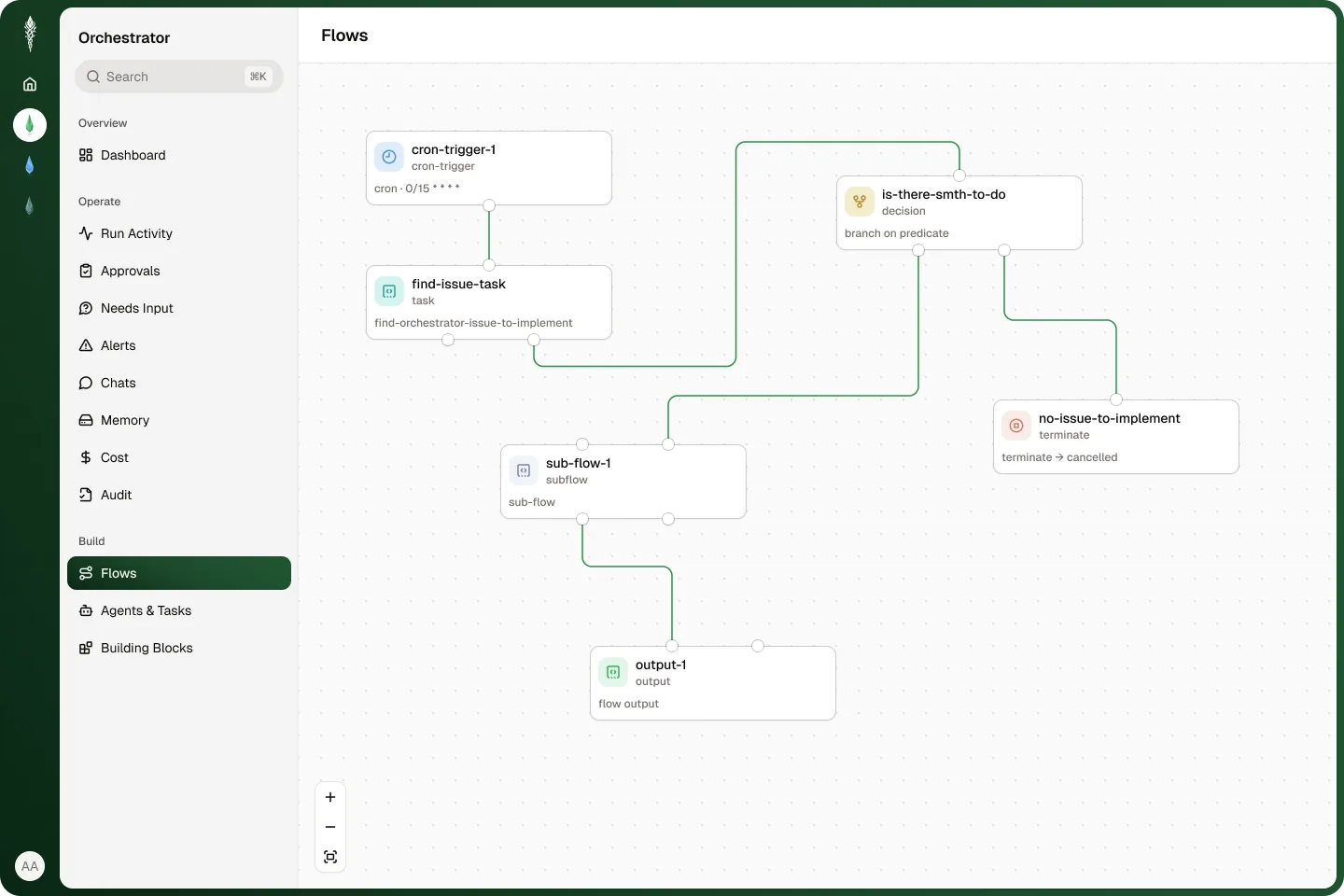
Under the hood, every step is a specialized agent. You see none of that. Production errors, Jira tickets, events: signals go in, the orchestrator does the legwork through the same gates you just saw, and a human signs off only when risk demands it.

Human in the loop on call · every step quick question answered ✓ review red · deciding resolved ✓
Incoming signals
production error a service starts failing
Jira ticket a bug lands in the backlog
security advisory a CVE hits a dependency
Orchestrator
Context Fabrictestingsecuritycode reviewdeployment
Pull request all gates green · fully traced

Signals stream in: errors, tickets, events, advisories.

The orchestrator picks one up and does the legwork.

Mid-flow it pings a human: one quick question, answered.

Code review turns red. The human is back in the loop.

Review green, deployment done. A pull request rolls out.

Want to see the Orchestrator on your stack?

Book a demo ->

The orchestrator takes the night shift

One orchestrator runs every flow above end to end: it watches, correlates, plans and prepares. The same gates, the same approvals, the same audit trail. People step in only where judgment matters. Where it pays off on day one:

Incident response

Prod throws 500s at 2 a.m.

  1. 02:14

    Alerts fire: error rate spikes on production.

  2. 02:31

    Logs correlated, root cause pinned, fix drafted and run through every gate.

  3. 08:00

    Morning standup reviews a green, fully traced pull request.

A pull request, not a Zendesk ticket

Regression hunt

Error rate doubles on the API

  1. 11:02

    The checkout API starts failing twice as often.

  2. 11:04

    Events correlated across services; the deploy that broke it identified.

  3. 11:27

    A proposed fix waits for one click of approval.

Root cause before the war room

Bug reproduction

A customer hits the same bug, twice

  1. 14:50

    Support escalates a recurring, hard-to-pin failure.

  2. 15:12

    Replayed from logs and telemetry; a failing test now reproduces it.

  3. 16:05

    The fix ships with a regression test bolted on.

Reproduced, fixed, locked for good

Security patch

A CVE lands in a core library

  1. 06:00

    A new vulnerability drops in a dependency you run.

  2. 06:18

    Affected components mapped, dependency bumped, full gate suite run.

  3. 07:02

    A verified upgrade sits ready to merge.

Patched in hours, not sprints

Migration

A deprecated API, used in 214 places

  1. 09:00

    The framework flags an API for removal; your repo calls it everywhere.

  2. 09:30

    Call sites mapped, the mechanical 95% migrated, gates run on every change.

  3. 11:45

    Humans review the six call sites that actually needed judgment.

214 call sites, six human decisions

CI hygiene

CI fails every third run

  1. 16:20

    A flaky test starts blocking every other merge.

  2. 16:35

    The test is quarantined, history bisected, the race condition pinned.

  3. 17:10

    A deterministic fix lands; the merge queue moves again.

A test suite you can trust again

How we engage

Four phases that build on each other, each delivering working capability you can see and use. Exact scope, pace, and team are agreed with you for every engagement, never off a fixed price list.

Phase 1 VirtusLab leads
Phase 2 Deep collaboration
Phase 3 Scaled rollout
Phase 4 We stay on call

The platform we bring

One spine: the Context Fabric. Review, testing, security, and governance all read the same ground truth, so agents and reviewers answer the same questions the same way. Composing, hardening, and integrating them into a regulated enterprise stack is what teams hire us for, because we have already done it more than once.

Sources

Git repository code · history · blame
Confluence / Notion ADRs · runbooks
Jira / Linear tickets · ownership
CI / Actions builds · artifacts
CLAUDE.md / rules conventions
VISDOM Context Fabric

Ingest · normalize · index the organization's ground truth.

Components reading it

Coding Agent context · conventions
Code Review ownership · blast radius
Testing conventions · risk

Every Visdom component reads the same ground truth.

01

Visdom Context Fabric

Context Fabric delivers tailored context for your planning, coding, and review agents. Agents not only have to perform less discovery each time, but they are also provided with information that is often not accessible without having the broader picture.

Deterministic code expertise, blast radius analysis, and ownership graphs via MCP.

02

Visdom Code Review VCR

Code Review provides automated pre-review for AI- and human-authored pull requests. By validating changes against engineering conventions, risk patterns, and common failure modes, reviewers can focus their attention where it matters most.
Pull request
Visdom Code Review
L1Linting review
L2Deterministic review
L3Single-pass LLM
L4Deep LLM review
Triage
Risk gate
Human in the loop
03

Visdom Testing

Testing introduces validation layers that go beyond traditional unit tests and coverage metrics. By combining architecture testing, property-based testing, and mutation testing, it uncovers defects that conventional testing approaches often miss.
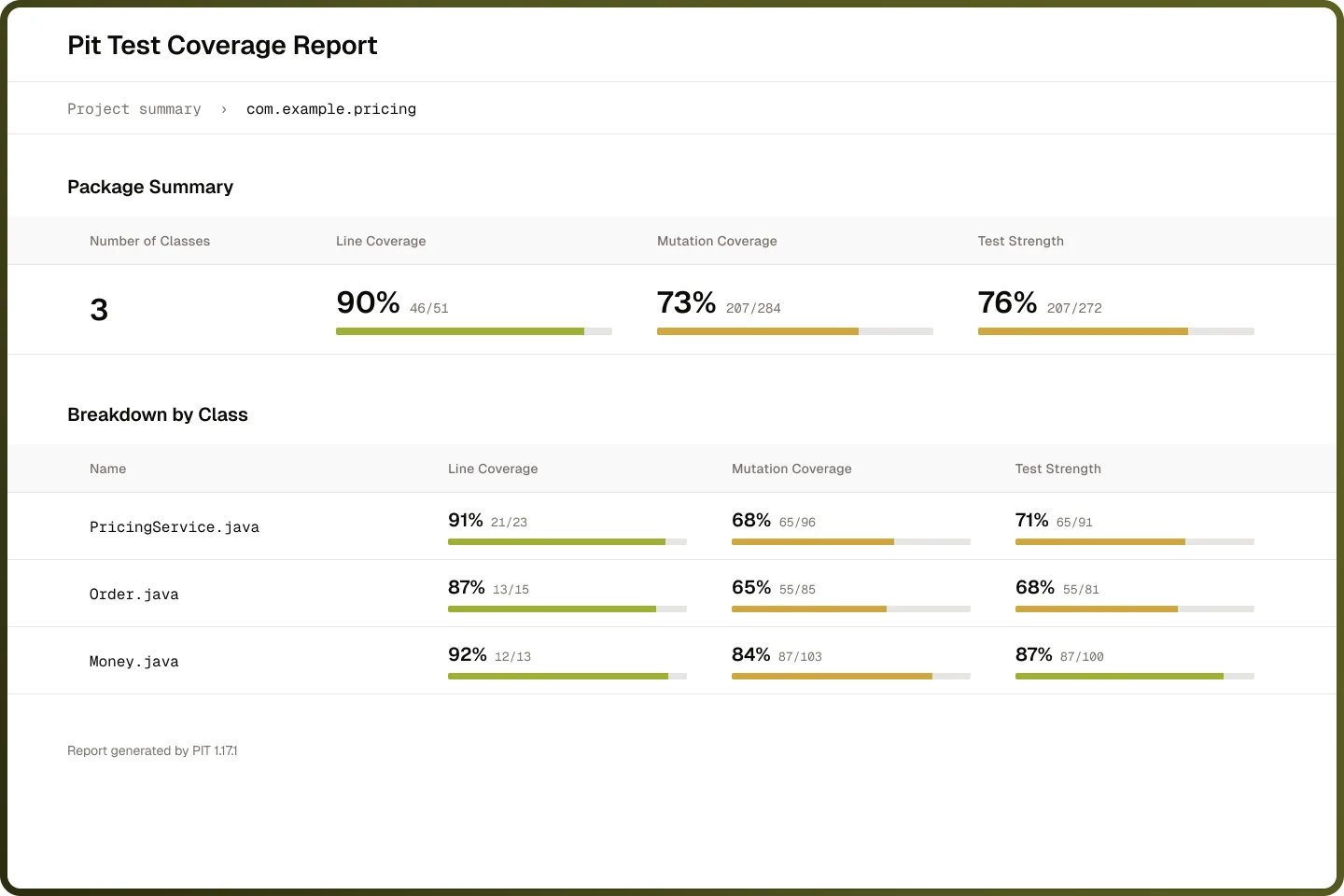
Adaptive test shape tuned to your architecture, with architecture gates that stop AI from drifting.

Visdom Testing
Classic tests
Architecture testing
Property-based
Mutation testing
Trace Session traces, token usage, tool calls, secret redaction
Enforce Model allowlists, path protection, token budgets
Audit Ed25519 signatures, hash-chained records, SOX/PCI-DSS
Evaluate Auto-evaluation, model distribution, adoption patterns
Attribute Line-by-line AI code attribution via tree-sitter
04

Visdom AI Tracing

Captures AI interactions across the software delivery lifecycle, enforces policies, and provides a tamper-evident audit trail. The flight recorder your team needs to operate AI systems with confidence, accountability, and full visibility.
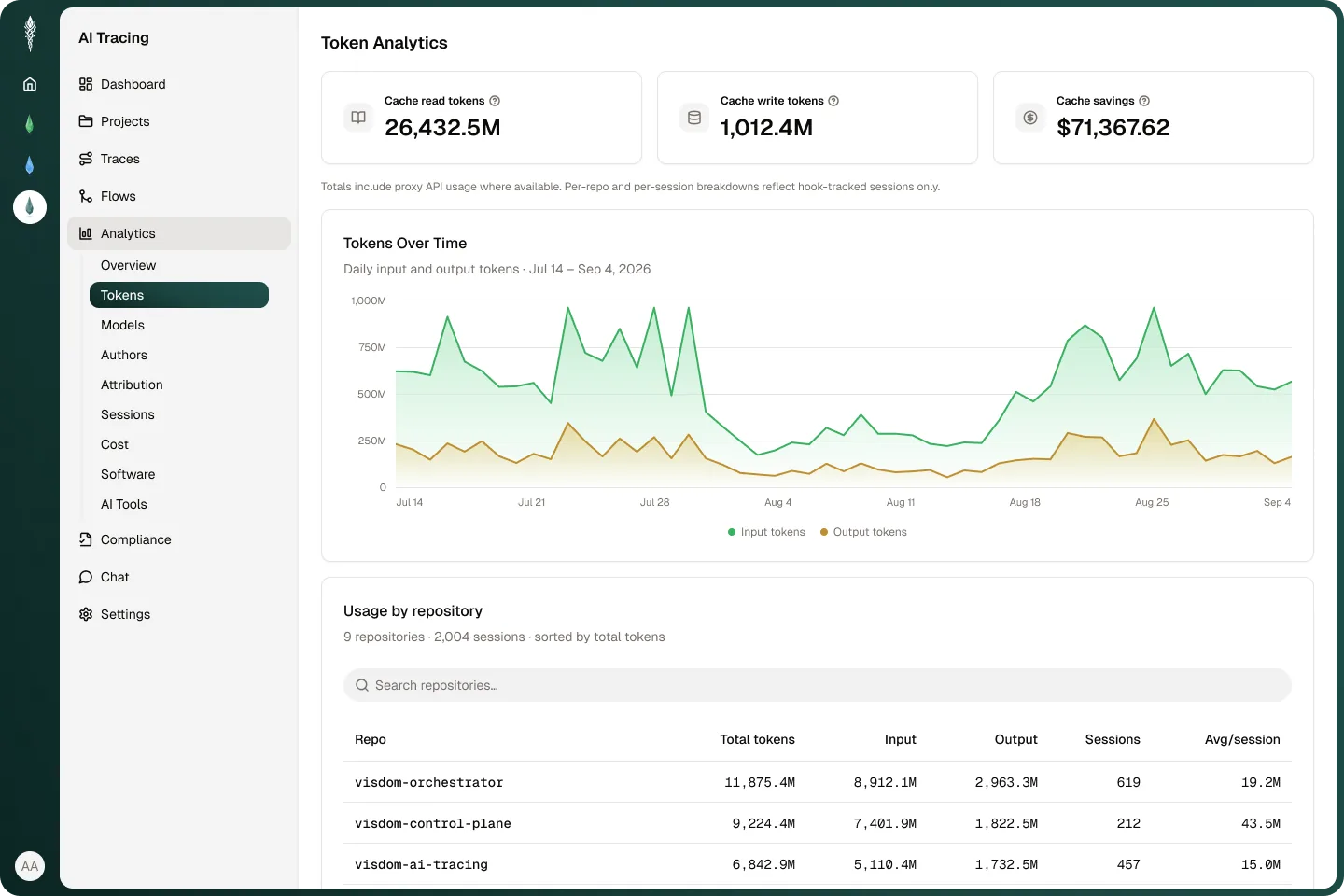
Ed25519-signed, hash-chained records with line-by-line AI attribution, mapped to EU AI Act, SR 11-7, SOX, PCI-DSS, and DORA.

05

Visdom Security

Security provides guardrails for your AI agents and delivery workflows. Agents can operate safely with controlled access to systems, credentials, and resources while generated changes are continuously validated against security policies.
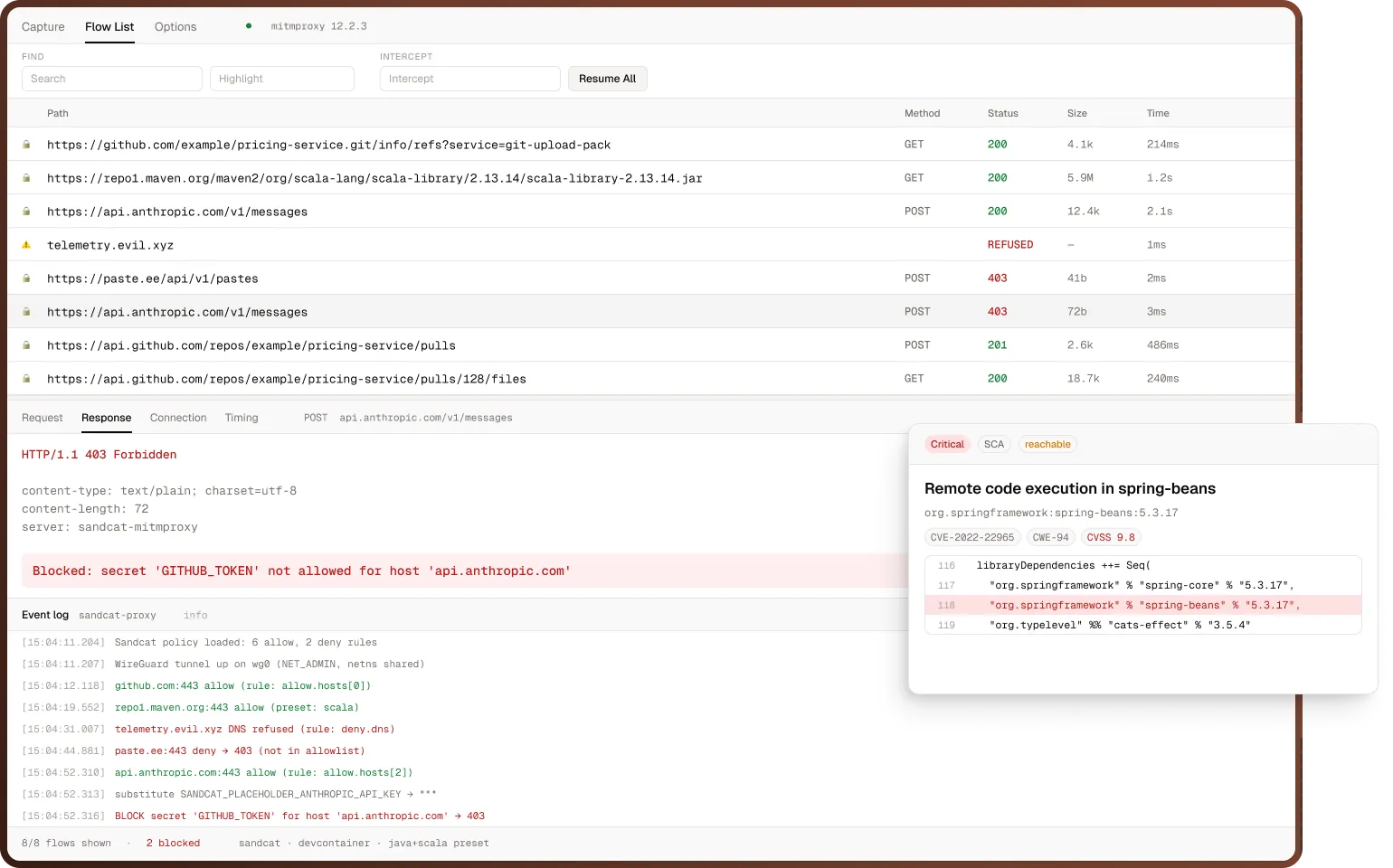
Powered by Sandcat (containment) and Aikido (AppSec): ephemeral isolated sandboxes with scoped credentials and egress allowlists, plus reachability-based scanning built for agentic workflows.

Two layers, one protection model.

Sandcat · runtime containment
Agent isolated ephemeral sandbox · execute · test · iterate
✓egress wall lets out: package registries · LLM APIs
✗your data · secrets · production → 403

Real secrets stay outside the sandbox, injected only on approved calls.

Aikido · AppSec scanning

Every change the agent produces is scanned before it merges:

SAST · code SCA · dependencies DAST · APIs Secrets IaC · cloud
✓reachability triage surfaces only exploitable findings
Build time reduction -88%

Global logistics, Scala monorepo, sbt -> Bazel. 40-60 min -> 5 min.

PR merge time -43%

Investment bank, Scala monorepo, managed IntelliJ IDEA.

Agent iteration speed (target) ~50x/hr

Target cadence for coding agents - the speed today's pipelines need to keep up with.

Client names under NDA. Full write-ups on the VirtusLab success stories page.

06

Visdom Machine CI Coming Soon

Machine CI provides continuous integration optimized for AI-native software delivery. By reducing build times and feedback cycles, it enables agents to operate at machine speed without being constrained by traditional CI pipelines.
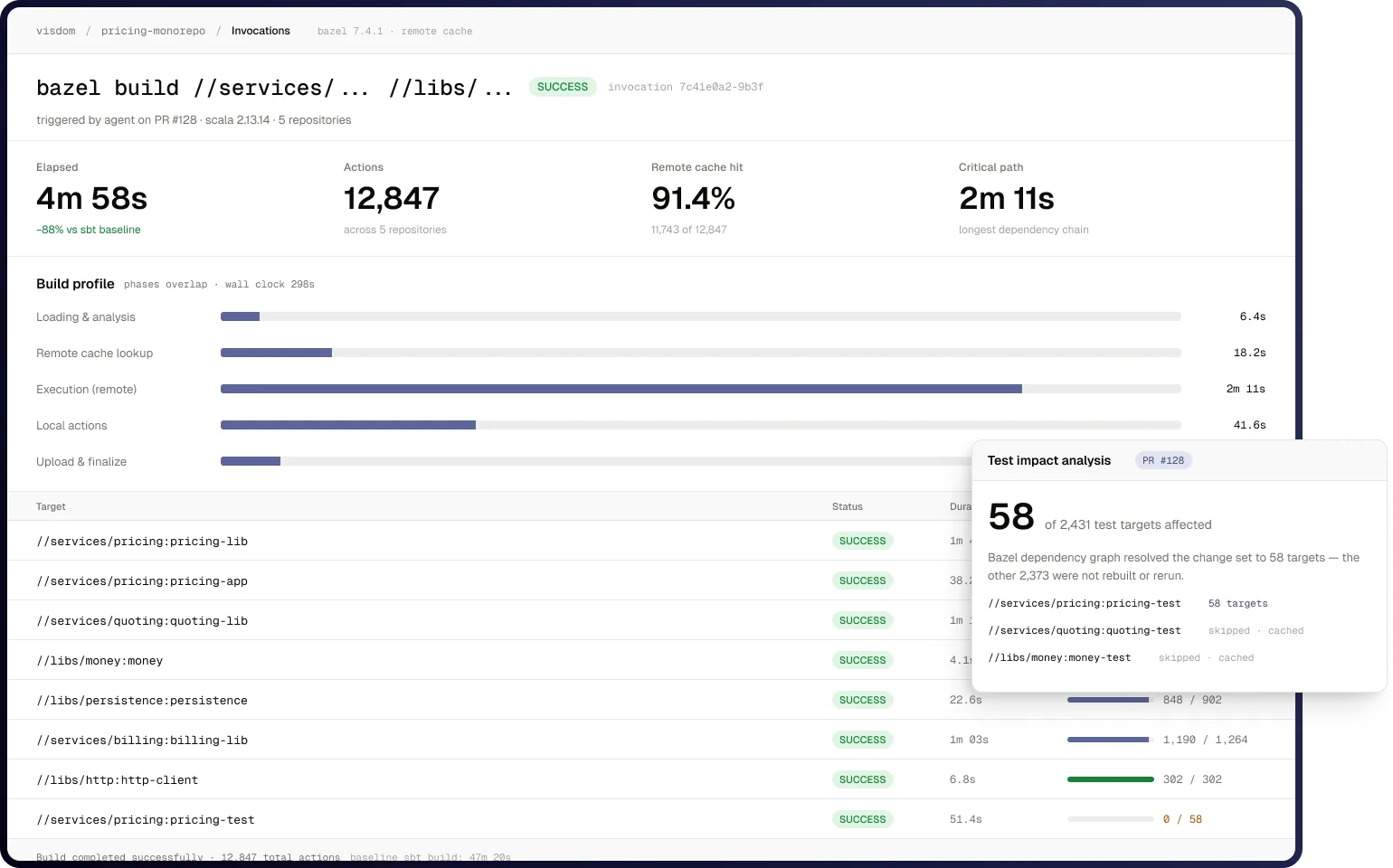
Built on

The experience behind Visdom

These are VirtusLab's own results from building platform tooling and optimizing delivery, not Visdom product metrics. They are the track record we draw on to build it. Clients under NDA, with full write-ups on the VirtusLab success stories page.

43%

reduction in PR merge time

for a leading investment bank

Scala monorepo, managed IntelliJ IDEA solution.

15%

decrease in pod count for a single workload

for a global hospitality leader

Workload right-sizing across the platform footprint.

88%

reduction in build times

for a global freight forwarder

Scala monorepo migrated from sbt to Bazel, 40-60 min down to ~5 min.

VirtusLab engineers at an AI infrastructure conference, in Can Your AI Agents Actually Ship shirts.
Out in the field on the Visdom AI Tour.

We work in the open and share what we learn.

50+ articles across three series, written by the engineers building the AI-native SDLC and published openly for the wider community.

The AI Maturity Matrix

The framework we scope every engagement with. It shows where your SDLC stands today, and what the first two weeks should target.

The AI Maturity Matrix for Development: capabilities scored across five levels from Ad-hoc to Autonomous, with L4 Optimized as the target. Explore the live matrix

Where does your organization stand?

The Visdom Maturity Matrix maps 60 practices across 4 perspectives and 5 maturity levels.

L1Ad-hoc
L2Guided
L3Systematic
L4Optimized
L5Autonomous
DevelopmentDeliveryOrganizationInfrastructure

Skip the deck. Start with the code.

The fastest way to know if we can help is a 30-minute call with the engineers who built this. If the fit is there, we scope an Assessment together. If it isn't, you leave with pointers to our engineering writing and the Matrix.

Recommended

Book a working session

30 minutes with a staff engineer. We review your current stack, name the one pattern that would move your number first, and tell you if Visdom is the wrong fit.

Book a working session ->

Self-serve

Run the Matrix yourself

60 practices across 4 perspectives. Takes 20 minutes. You walk away with a scored baseline and a clear first move to make with us.

Self-assessment is free. Facilitated workshop + diagnosis is a fixed fee - ask for a quote.

Run the Matrix ->

Engineering-first

See how we think

50+ articles on the AI-Native SDLC: context, CI, review, and governance. Read the engineering before you judge the sales deck.

Read the writing ->

Prefer email? visdom@virtuslab.com. Replies come from an engineer, within one business day.